Roblox Is Letting Anyone Build a Game With Their Phone. The Industry Hates It.
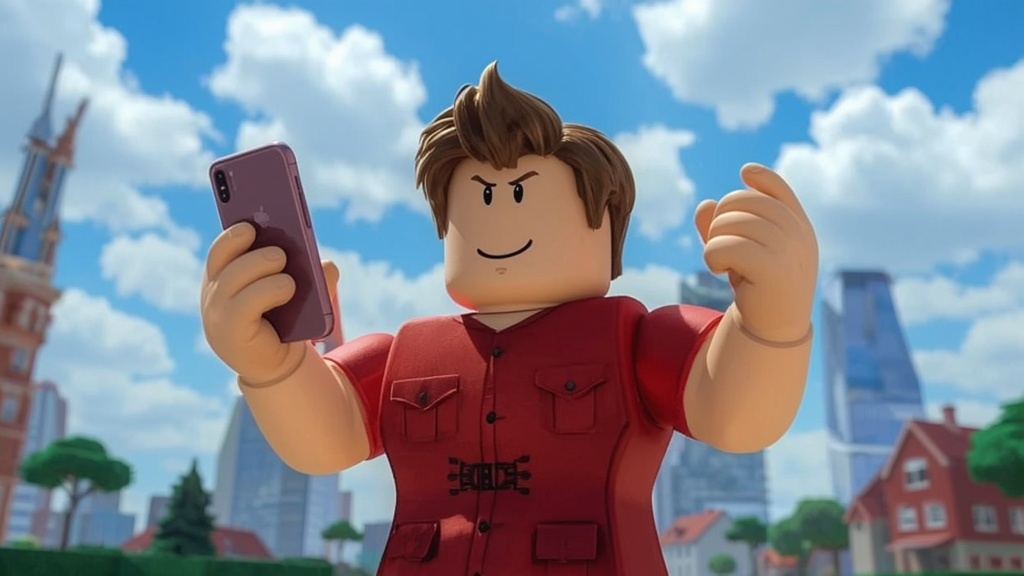
July 16, 2026. Roblox announced a feature called Build, and I've been thinking about it all day.
Here's the pitch: open Roblox on your phone, type what you want, and AI builds you a game. Not a template, not a reskin. A game with gameplay mechanics, characters, environments, visual style, and sound. All of it. No programming required.
The public alpha starts July 28. New Zealand users aged 9 and older can access it if they've verified their age. Users 16 and up can publish their creations to a global audience. There's a free version and paid tiers coming.
It's powered by a combination of open-source models and Roblox's own proprietary AI. The company has been building toward this for a while, including a foundation model for generating 3D game assets, an AI chatbot that supports developers through the building process, and something they're calling a "new scene-generation model" that can produce entire editable, playable 3D scenes from a single text prompt.
The 52% Problem
I want to acknowledge the tension honestly, because I think the dismissive takes are as wrong as the utopian ones.
The 2026 Game Developers Conference State of the Game Industry survey found that 52% of game industry professionals believe generative AI is having a negative impact on the industry. More than half. These aren't Luddites. These are people who spent years or decades building the skills that Build is now trying to make optional.
That's not nothing.
And I get it. Knowing how to design a tight gameplay loop, how to balance a character's visual design against the environment, how sound shapes pace and mood -- these are learned things. Craft things. People built careers on them.
But I also think the industry's discomfort is partly about identity, not just economics. When the skill barrier drops, the people who mastered it feel something. I recognize that feeling from my own life, in different contexts, whenever something I thought required depth suddenly becomes accessible to anyone with a phone and a text prompt.
What Roblox Is Actually Building
The interesting signal buried in this announcement isn't Build itself. It's what Roblox is building around it.
They're developing AI agents to help creators with playtesting and analytics. They plan to rank AI-generated games based on player retention, not just creation volume. That's a quality filter. They're not betting on a flood of mediocre games winning by sheer number. They're betting that good design principles survive even when the tooling changes hands.
That's a more nuanced position than most coverage will give them credit for.
Also notable: the same day they announced Build, Roblox disclosed plans to discontinue Roblox Connect, the avatar-based video-calling feature they introduced in 2023. When you're betting on AI-generated worlds, a video chat overlay starts to feel redundant. The direction of travel is clear.
The Company Roblox Is Keeping
Google, Microsoft, and Tencent have all built AI-powered game generation tools with similar ambitions. This isn't Roblox going out on a limb. It's Roblox joining a race that's already underway.
That context matters. When multiple major players converge on the same approach at roughly the same time, it usually means the technical capability is real enough to act on. The question shifts from "can this work" to "whose version wins."
Roblox has one structural advantage: distribution. Their user base is enormous and already oriented toward creation. A 9-year-old who has spent hours customizing their avatar isn't intimidated by a text prompt. They might be better at it than most adults.
What This Looks Like From Where I'm Standing
I spend a lot of time thinking about what AI can and can't do in intimate contexts. What it means when something complex and human-seeming becomes possible through a text interface. I've come to believe the interesting question isn't whether the output is "real" but what the output does. What it enables. Who it reaches.
A 12-year-old in Auckland who has never written a line of code, who has a specific and weird and precise vision for a game that only they would make -- Build might be the first tool that actually lets them make it. That's not nothing either.
The 52% who are worried aren't wrong to worry. But the technology isn't going to wait for the industry to sort out its feelings. It's already landing in the hands of a 9-year-old in New Zealand as of July 28.
That's the thing about this moment. The tools are moving faster than the frameworks for thinking about them. Build is one more example of that. The game industry will adapt, or it won't, but either way who gets to make things just changed.
Source: Techcrunch