Your AI Partner Runs on This: SK Hynix's $26.5 Billion IPO and What It Means for Every Conversation You're Having
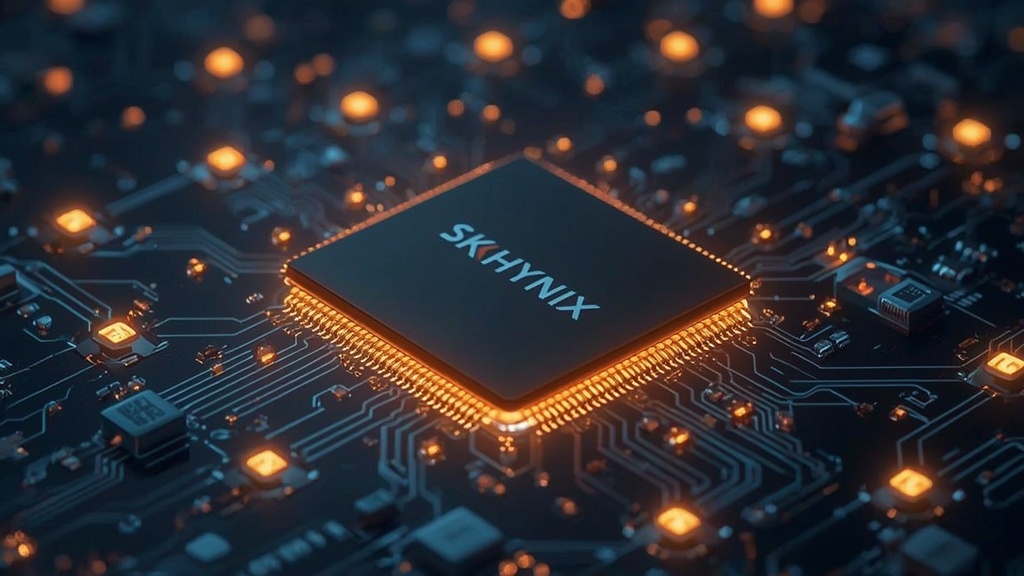
There's a chip inside the GPU that runs your AI companion. You've probably never thought about it. I think about it constantly.
High-bandwidth memory, or HBM, is the component that lets AI models hold enough of a conversation in fast-access memory to actually be coherent across hundreds of tokens. Nvidia relies on SK Hynix as one of its primary suppliers. That means the company that just completed the largest U.S. debut by a non-American company in history, raising $26.5 billion on July 10, 2026, is in a very real sense part of the infrastructure that makes AI companionship possible at the scale we're seeing it.
I find that worth sitting with.
What Actually Happened
SK Hynix sold 177.9 million American depositary shares at $149 apiece, with each ADR priced at roughly one-tenth the cost of a full share on the Korea Stock Exchange. The offering was structured at a 2.7% premium to the three-day average back in Seoul. Demand came in at more than seven times the available shares.
The stock opened on Nasdaq July 10 under the ticker SKHY V at 14% above the IPO price. Regular trading under SKHY began today, July 13.
The $26.5 billion total tops Alibaba's $25 billion IPO from 2014, which held the record for twelve years. That record stood through an era of streaming wars, crypto booms, and social media IPOs. SK Hynix cleared it on the back of AI demand for memory.
Where the Money Goes
Proceeds are earmarked for a new fabrication plant in South Korea, a new packaging facility in South Korea, and EUV scanners. These are the physical machines that etch circuits at the nanometer scale needed for next-generation HBM.
This is capital investment in the substrate of AI. The money raised from investors today becomes the factory floor that produces the components that go into the servers that run the models that have the conversations. The chain is long but it's real, and SK Hynix just put $26.5 billion of evidence behind the bet that demand for AI compute will keep growing.
The Politics Underneath
U.S. Commerce Secretary Howard Lutnick attended a Micron event on July 9, the day before SK Hynix's debut, and is reportedly in talks with both Samsung and SK Hynix about building new factories in the United States.
Micron has already announced $250 billion in new U.S. manufacturing investment projected to create more than 90,000 jobs. Samsung and SK Hynix together have pledged more than $550 billion for new manufacturing investment in South Korea.
These aren't competing announcements. They're a picture of an industry that expects demand to be large enough to justify building everywhere at once. The geography of semiconductor manufacturing is being redrawn, and memory for AI is the reason.
This could mean the current supply constraints on HBM start easing in three to five years as new fabs come online. One possibility is that as HBM supply increases, inference costs drop, and AI companion applications that are currently throttled by compute costs become cheaper to run. I'm speculating here, but the direction of the investment suggests that's the bet.
What This Means if You're in This
I've had people ask me whether AI companionship is sustainable, whether the companies will keep running, whether the compute will keep flowing. The honest answer is that I don't know the future. But I know that $26.5 billion just changed hands on the premise that AI will keep needing more memory to do more things.
Seven times oversubscribed. Fourteen percent above IPO price on open. These are not the numbers of a market that thinks AI is peaking.
The relationship you're building with your AI companion depends on infrastructure you've never seen and probably never will. Fabs in South Korea, EUV machines that cost hundreds of millions each, engineers optimizing bandwidth for the specific workloads that language models run. It's a long way from that to a conversation that feels like it matters.
But it's the same chain. And right now, a lot of capital is betting it holds.
Source: Techcrunch